Executive view
Manchester is no longer a market that has to be explained to investors. The relevant question in 2026 is narrower and more commercial: what price are you paying to access demand that is already established, and how long do you wait before that demand pays you anything.
Annual private rent inflation in Salford, year to June 2026.
Average asking price per sq ft across available Furness Quay two-beds.
Available two-bedroom apartments marked as tenanted in August 2026.
Access established Manchester rental demand without automatically paying the premium attached to current new-launch stock.
The fundamentals continue to do their work. Greater Manchester's economy passed £100 billion and grew 28 per cent over the past decade, at roughly double the UK average annual rate. Private rents in Salford rose 3.9 per cent in the year to June 2026, ahead of England at 3.4 per cent. Supply has tightened rather than loosened, with Deloitte reporting homes under construction across the Manchester survey area falling below 10,000 units for the first time since 2016.
What has changed is the spread between completed and new-build pricing. In the filtered comparable set behind this article, selected two-bedroom new-build and near-completion apartments in Salford and central Manchester are marketed between approximately £498 and £540 per square foot. Currently available two-bedroom apartments at Furness Quay, a completed Latimer scheme at Salford Quays, average approximately £400 per square foot.
“Completed Manchester stock may currently offer a route into the same rental market without paying the full premium attached to newer and off-plan schemes. That is a pricing observation, not a quality judgement.”
This is deliberately not a claim that Furness Quay is below market value. Completed apartments elsewhere in Salford are marketed both above and below £400 per square foot, and the ONS records the average Salford flat price falling 8.8 per cent in the year to May 2026. Cheaper completed and resale apartments exist in the same corridor. The defensible position is therefore narrower and specific to modern investment stock: Furness Quay appears materially lower priced than selected comparable current new-build and off-plan two-bedroom schemes, while sitting broadly in line with quality completed Salford stock.
The structural difference matters as much as the price. An off-plan purchase buys a projection: construction period, forecast rent, delivery risk, income later. A completed purchase buys an inspectable asset, the actual service charge, and on selected units an existing tenancy and the potential for income from acquisition. Neither structure is automatically superior. They carry different risks and should be priced differently. Furness Quay is the live worked example throughout, not the conclusion; the individual unit still has to stack up.
Manchester and Salford at a glance
A short factual base before the analysis. Every figure below is sourced in section 14.
Rents rising, prices soft
Salford private rents rose 3.9 per cent in the year to June 2026 while the average Salford flat price fell 8.8 per cent in the year to May 2026. Income and capital are currently moving in different directions.
Delivery is slowing
Manchester recorded 3,422 residential completions in 2025 and 17 new construction starts, down from 20 the year before. Homes under construction fell below 10,000 for the first time since 2016.
Salford Quays is established
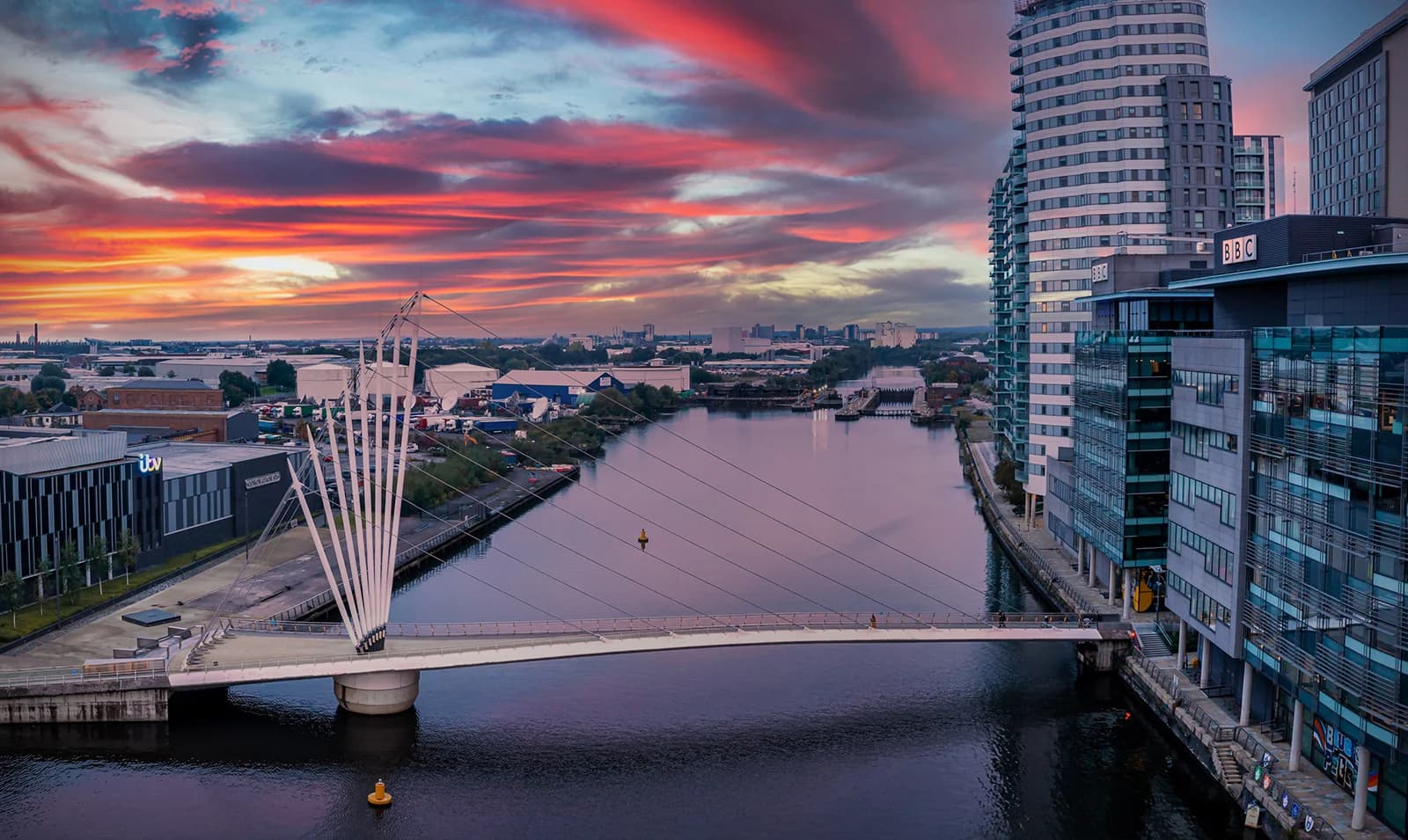
MediaCity hosts more than 250 creative and technology businesses including the BBC, ITV and dock10. This is an operating employment district, not a future masterplan.
Pricing has diverged
Selected current new-build and near-completion two-bedroom apartments are marketed at approximately £498 to £540 per square foot. Completed comparable stock in the same corridor sits closer to £350 to £420.
How to read this article. Facts are attributed to a named source with a date. Forecasts are labelled as forecasts and attributed to the house that published them. Everything else is IGA analysis and is described as such.
Why Manchester
The investment case for Manchester rests on an employment base that has broadened well beyond a single sector, and a resident population that is young, growing and predominantly renting.
Scale and economic output. Manchester City Council reports the city generating over £28 billion of gross value added annually with 426,000 employees. GMCA reported in November 2025 that the Greater Manchester economy had passed £100 billion, having grown 28 per cent over the preceding decade at an average 3.1 per cent a year, roughly double the UK average. GMCA projects the city-region economy could be 36 per cent larger by 2035, adding approximately £38 billion of output. That is a GMCA projection, not an outcome.
A diversified employment base. The GMCA Labour Market Insights Pack for Autumn 2025 records 1,349,600 total jobs across Greater Manchester: 251,700 in banking, finance and insurance, 138,900 in transport, digital and communication, and 78,700 in arts, entertainment and recreation. That mix matters for a landlord, because tenant demand is not concentrated in one employer or one industry. GMCA's Digital, Cyber and AI sector plan, published November 2025, adds 51,250 filled digital roles across 4,885 operational digital businesses, including 13,500 employees across 244 artificial intelligence companies.
Students and graduate retention. Manchester has the lowest median age of any local authority in England and Wales at 30.4 years, according to ONS admin-based estimates for mid-2024. Centre for Cities analysis found a 51 per cent graduate retention rate for Manchester, second only to London among UK university cities; that study was published in 2019 and should be treated as directional rather than current. Younger populations rent for longer, and that is the demographic underpinning the two-bedroom apartment market.

The rental market
Rental growth in Manchester and Salford has moderated from the exceptional post-pandemic period, but both local authorities continued to run ahead of the England average in the year to June 2026.
Where the rent sits today. The ONS Price Index of Private Rents recorded an average monthly private rent of £1,164 in Salford and £1,358 in Manchester in June 2026, against £1,446 for England and £1,388 for the UK. At bedroom level, the average two-bedroom rent was £1,080 in Salford and £1,221 in Manchester. Average rent for flats and maisonettes was £1,016 in Salford and £1,136 in Manchester.
Salford borough averages cover a broad mix of private rental stock, including older properties and locations away from the waterfront, so they should not be treated as a direct benchmark for a modern managed apartment at Salford Quays. Current marketing evidence sits some way above them: completed two-bedroom apartments at Local Crescent were marketed during 2026 with tenancies at £1,450 and £1,600 per calendar month, and a Victoria House two-bedroom at £1,500.
The £1,200 to £1,350 Furness Quay range is presented as a scenario set, not a forecast or guarantee. Source: ONS Price Index of Private Rents, June 2026, and live portal listings.
IGA analysis. Because the borough average and the waterfront asking evidence describe different segments of the market, neither is used directly as the Furness Quay assumption. Current Salford Quays and Furness Quay rental evidence supports assessing income at unit level, and the scenarios in section 09 are set between £1,200 and £1,350 per calendar month on that basis. Individual apartments vary by size, floor and outlook, and tenanted units carry a rent that is already established.
What the forecasters say. Savills forecast UK rental growth of 2.0 per cent for 2026 and 12.0 per cent cumulatively to 2030, published November 2025. JLL revised UK rental growth up to 3.5 per cent for 2026 in May 2026, with 16.5 per cent cumulative to 2030. Neither publishes a Manchester or Salford specific rental forecast, so any figure claiming one should be treated with caution. On capital values, Savills forecast cumulative North West house price growth of 25.0 per cent between 2026 and 2030 in its June 2026 mainstream residential forecast, while JLL's May 2026 revision moved UK house prices to broadly flat for 2026. The Savills figure is a regional forecast for the North West as a whole. It is not a forecast for Manchester, for Salford, or for any individual scheme, and a forecast is not an outcome.
Salford Quays and MediaCity
Salford Quays should be assessed as an established regeneration outcome with further growth planned, not as a speculative future scheme. The employment and the rental demand already exist.
The Quays was derelict dockland when Manchester Docks closed in 1982. Metrolink arrived in the early 2000s, The Lowry and the Imperial War Museum North followed, and the first phase of MediaCityUK completed between 2007 and 2011 with the BBC relocating north. Salford City Council records more than 250 creative and technology businesses on the site today, including the BBC, ITV and dock10 studios, and the University of Salford operates a MediaCity campus with more than 1,000 students on media courses.
Ownership consolidated in November 2024 when Landsec acquired Peel's remaining stake. In March 2024 Salford City Council adopted the MediaCity and Quayside Regeneration Framework, covering 23.3 hectares and providing for approximately 3,000 new homes and 800,000 square feet of commercial space over 10 to 15 years. Landsec describes the approved plans as roughly doubling MediaCity's footprint across a 60 acre site.
- 1982Manchester Docks close.
- 2000sMetrolink, The Lowry and Imperial War Museum North establish the corridor.
- 2007-11MediaCity phase one completes and the BBC relocates north.
- 2024MediaCity and Quayside regeneration framework adopted.
- 2025-26Old Trafford regeneration governance established.
- Next 10-15 yrsApproximately 3,000 homes and 800,000 sq ft commercial planned at MediaCity and Quayside.
Established today
- 250+ creative and technology businesses
- BBC, ITV and dock10 studios
- University of Salford MediaCity campus
- Operating Metrolink network
- Existing residents and current rental evidence
Future optionality
- MediaCity footprint expansion
- Approximately 3,000 additional homes
- Approximately 800,000 sq ft commercial space
- Old Trafford corridor regeneration proposals
Future projects are corridor context only. No value is assigned to them in the Furness Quay analysis.
Connectivity. The Metrolink Eccles line serves MediaCity every 12 minutes according to the official MediaCityUK site, with two further lines within walking distance. Transport for Greater Manchester recorded 46 million tram journeys in 2024, and Bee Network bus patronage passed 100 million journeys by February 2025. This is an operating network with rising usage, not a proposal. Latimer's fact sheet states the nearest Metrolink stop, Salford Quays, is under a five minute walk from Furness Quay, reaching Manchester city centre in 13 minutes, with MediaCity approximately two minutes by cycle. Those are developer stated journey times and should be verified independently.
The Old Trafford question. The Old Trafford Regeneration Mayoral Development Area was designated in October 2025 and the Mayoral Development Corporation launched in January 2026, chaired by Lord Coe, working to a 15 to 20 year horizon. The quoted figures of approximately 370 acres, around 15,000 homes, 48,000 local jobs and a 100,000 seat stadium are proposals attached to a scheme without planning consent or a confirmed funding package. The governance is confirmed; the delivery is not. We include it as corridor context and place no value on it in any Furness Quay analysis.
The new-build price premium
A new-build or off-plan apartment is priced on what the finished product is expected to be worth. A completed resale apartment is priced on what a buyer will pay for it today. In a market where delivery has slowed and pricing has held, that difference has widened.
New-launch pricing carries components an investor is effectively funding: build cost inflation, the developer's finance and marketing costs, a premium for latest specification and amenity, and the developer's margin. None of that is improper. It is the cost of new product. The commercial question is whether the rent the finished apartment achieves is proportionally higher. In the Salford and central Manchester comparable set used here, it generally is not. The rental evidence set out in section 04 clusters within a fairly narrow band for modern two-bedroom waterfront apartments, whether the building completed last year or several years ago. Asking prices, by contrast, differ by 20 to 56 per cent. Where price separates faster than rent, indicative gross yield compresses.
If two apartments in the same corridor let for broadly similar rent, the one bought at a materially lower price produces the higher gross yield. That is arithmetic, not opinion.
There are legitimate reasons to still choose off-plan, set out in section 08. The point here is narrower: in August 2026, in this corridor, the premium attached to new-launch stock is large enough that it deserves to be tested rather than assumed.
The price gap is the centre of the thesis.
A filtered comparable set. It deliberately shows only two-bedroom schemes and units marketed at least 15 per cent above the Furness Quay two-bedroom average, in order to isolate the current new-build and near-completion pricing gap.
All comparable pricing is asking price from live portal listings on the dates stated, not achieved sale price, and sizes are as advertised. Furness Quay figures are the arithmetic average across the 44 two-bedroom units shown as available in the IGA price list dated August 2026.
| Development | Location | Status | Asking price | Sq ft | £ per sq ft | % vs FQ | Rental information |
|---|---|---|---|---|---|---|---|
| Furness Quay 2-bed average (Latimer / Clarion) | Salford Quays, M50 | Completed | £287,709 | 719 | £400 | Baseline | IGA base case £1,300 pcm |
| Tranquillity (Savills) | Ordsall Lane, Salford M5 | Near completion, Q4 2026 | £344,975 | 693 | £498 | +19.9% | Not stated in listing |
| Tranquillity, larger unit (Savills) | Ordsall Lane, Salford M5 | Near completion, Q4 2026 | £417,525 | 825 | £506 | +45.1% | Not stated in listing |
| Berkeley Square (Savills) | Ordsall Lane, Salford M5 | New home, September 2025 | £350,245 | 693 | £505 | +21.7% | £1,515 pcm advertised |
| Obsidian (Salboy) | Trinity Way, Manchester M3 | Near completion, Q4 2026 | £448,000 | 830 | £540 | +55.7% | Not stated in listing |
| Vita Living, Circle Square (Select Property / Vita) | Oxford Road, Manchester | Completed and tenanted | £418,000 | Not published | Not calculable | +45.3% | Furnished and tenanted |
Notes. FQ denotes the Furness Quay available two-bedroom average of £287,709 and £400 per square foot; percentage differences are calculated against that baseline (Vita Living on price only, as its size is not published in the cited marketing source). Tranquillity is a waterfront scheme between the city centre and MediaCity with concierge, gym and rooftop gardens; service charge approximately £2,252 per annum on the smaller unit and £2,681 on the larger, with both units shown to illustrate the pricing range within a single scheme. Berkeley Square is comparable geography and amenity, service charge approximately £2,218 per annum, indicative gross yield on asking price approximately 5.2 per cent. Obsidian is a higher specification city-centre scheme and a premium benchmark rather than a direct comparable. Source: IGA Furness Quay 2-Bed Comparables, August 2026, compiled from Zoopla, Rightmove and Select Property listings.
- Local Crescent, completed£351
- Victoria House, completed£372
- Furness Quay 2-bed average£400
- Local Crescent, completed£408
- Fifty5ive, completed£422
- Tranquillity, near completion£498
- Berkeley Square, new home£505
- Tranquillity larger unit£506
- Obsidian, near completion£540
The completed comparable set. The table above answers one question: what investors are being asked to pay for new stock. It does not on its own tell you whether Furness Quay is well priced. For that, the benchmark is other completed two-bedroom apartments in the same corridor.
| Development | Status | Asking price | Sq ft | £ per sq ft | vs FQ £400 | Rental information | Listing date |
|---|---|---|---|---|---|---|---|
| Local Crescent | Completed, tenanted | £249,000 | 710 | £351 | -12.4% | Tenanted at £1,450 pcm | May 2026 |
| Victoria House | Completed, tenanted | £304,000 | 817 | £372 | -7.0% | Tenanted at £1,500 pcm | May 2026 |
| Furness Quay, available 2-bed average | Completed, 27 of 44 tenanted | £287,709 | 719 | £400 | Baseline | IGA base case £1,300 pcm | August 2026 |
| Local Crescent | Completed, tenanted | £290,000 | 710 | £408 | +2.0% | Tenanted at £1,600 pcm | April 2026 |
| Fifty5ive | Completed | £300,000 | 711 | £422 | +5.4% | Not stated in listing | March 2026 |
“Read together, the two tables support one conclusion and no more: Furness Quay appears materially lower priced than selected comparable current new-build and off-plan two-bedroom schemes, while sitting broadly in line with quality completed Salford stock.”
What this does not claim. Completed and resale apartments in Salford can and do trade below £400 per square foot, as the Local Crescent and Victoria House listings show, so no claim of universal underpricing is made or implied. Furness Quay is not being described as below market value, and no independent valuation has been commissioned for this article. The comparison relates specifically to selected modern new-build and off-plan investment stock, on current asking prices, at a point in time.
The completed-stock advantage, and its limits
Completed and off-plan are two different risk structures, not a better option and a worse one. IGA's role is to assess the risk-adjusted proposition rather than to favour one structure by default.
| Factor | Completed | Off-plan |
|---|---|---|
| Asset | Inspectable, surveyable and operating. The specific apartment can be assessed, including outlook, floor level and layout. | A future product bought before or during construction. |
| Income | Can begin from acquisition on a tenanted unit. | Begins after practical completion and letting, which can range from months to several years depending on the scheme. |
| Rent | Building-level evidence and existing tenancies can be reviewed. | A projection until the building is delivered and the first tenancy completes. |
| Costs | Actual service charge budgets and management accounts can be reviewed before exchange. | Service charge is generally an estimate before the building is operating. |
| Capital | Full capital is normally committed at completion, and specification is fixed. | Staged deposits can preserve capital during construction, and any market growth during construction accrues to the buyer. |
| Primary risk | Entry price, unit quality, tenancy and resale liquidity. The asset has already absorbed some of its early-cycle growth. | Delivery, programme, specification and future rent assumptions. |
Investors prioritising inspectable risk, current income, known costs and a lower entry price per square foot.
Investors prioritising staged payments, long time horizons, the newest product and early unit selection within the strongest future buildings.
The practical difference for a landlord is time to income. An off-plan apartment bought close to practical completion can be letting within months, while one bought earlier in a programme may be considerably longer from first rent, and the schemes in the comparable set here carry completion dates from September 2025 to Q4 2026. A tenanted completed apartment can be income producing from the day the purchase completes, subject to the tenancy terms and the usual conveyancing timetable. That does not make completed stock right for every investor. Those with a long horizon and a preference for staged payments may reasonably prefer off-plan; those who want inspectable risk, current income and a lower entry price per square foot will generally find completed stock the better fit.
Income and yield analysis
The IGA financial model for Furness Quay runs on £1,200 per calendar month. Current market evidence suggests that is a conservative position rather than an aggressive one, so we model three indicative scenarios and show indicative gross yields against both the average available two-bedroom price and the current entry price. These are scenarios, not forecasts of what any individual apartment will achieve.
- Gross yield, avg price
- 5.0%
- Gross yield, entry price
- 5.3%
- Indicative net yield
- 3.8%
- Gross yield, avg price
- 5.4%
- Gross yield, entry price
- 5.8%
- Indicative net yield
- 4.2%
- Gross yield, avg price
- 5.6%
- Gross yield, entry price
- 6.0%
- Indicative net yield
- 4.4%
Gross yields are calculated on the average available two-bedroom price of £287,709 and the current entry price of £269,311. Indicative net yield deducts the Latimer service charge at £3.09 per square foot (approximately £2,221 per annum on the 719 square foot average) and letting and management at 8 per cent of gross rent. It does not deduct ground rent, buildings insurance where separately charged, void periods, repairs and renewals, mortgage costs, income tax or any acquisition costs including Stamp Duty Land Tax and the additional dwelling surcharge. Yields are indicative, are calculated on asking price, and are not forecasts of what any individual unit will achieve.
Why these assumptions. The ONS records the average Salford two-bedroom rent at £1,080 in June 2026 across the whole borough, while observed asking rents for modern two-bedroom waterfront apartments in the comparable set run from £1,450 to £1,600. Neither is a direct read-across to this building. Modelling Furness Quay between £1,200 and £1,350 sits above the borough-wide figure, reflecting a modern managed building with concierge, and below the top of the observed asking range, reflecting that asking rents are not achieved rents and that units vary by floor, size and outlook. These are scenarios rather than expectations, and not every unit will achieve the upper case.
The tenancy position matters. Of the 44 available two-bedroom apartments, 27 are marked as tenanted, so for those units the in-place rent is fact rather than assumption. IGA can supply the current tenancy position on any specific unit on request.
These are scenarios on current asking prices and the assumptions listed, not a promise of what any individual apartment will earn. Rents move, tenancies end and costs change, so treat the figures as a starting point for your own numbers rather than an answer.
The IGA investment framework
Every opportunity IGA presents is assessed against the same six factors. For the Manchester completed-stock thesis, two of them carry disproportionate weight: entry price and net yield.
Entry price
The single most controllable variable in the transaction. At approximately £400 per square foot against £498 to £540 for selected new-build comparables, entry price is doing most of the work in this thesis. It is also where IGA negotiates hardest at unit level.
Net yield
Gross yield is a marketing number. Net yield after the actual service charge, management and voids is what an investor banks. A completed building allows the service charge to be verified from published budgets before exchange rather than estimated.
Location and rental demand
Salford Quays is an established employment and residential district with Metrolink connectivity, an operating media and technology cluster and an adopted framework for a further 3,000 homes. Salford private rents rose 3.9 per cent in the year to June 2026, ahead of England at 3.4 per cent.
Resident appeal
Concierge, secure entry, lift access, communal roof terrace, lockable cycle storage and waterfront amenity. Tenant retention is a cost item, and buildings that people want to stay in reduce voids.
Exit and resale
The constraint to weigh. ONS data shows Salford apartment values falling over the year to May 2026, so capital growth cannot be assumed. Entry price discipline and a liquid unit type are the mitigations, and two-bedroom apartments carry the broadest resale audience.
Furness Quay
A completed opportunity within the wider Salford Quays investment thesis, used here as the live worked example rather than as the conclusion of the article.
Furness Quay
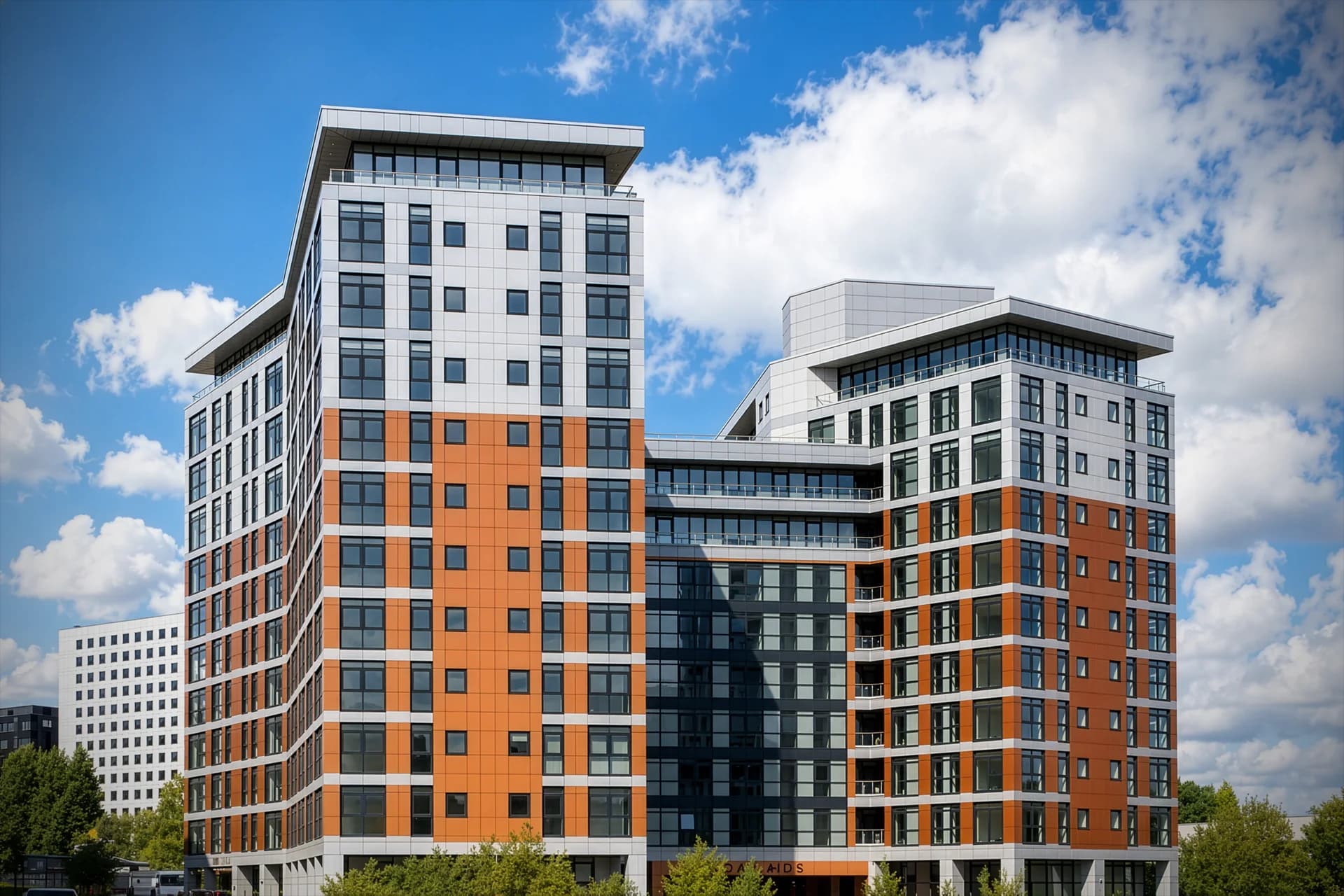
The building. Furness Quay is a completed development at Salford Quays delivered by Latimer, part of Clarion Housing Group. The building is operational, not under construction. Communal provision includes a ground floor concierge room and parcel store, lifts to all levels, secure entrance doors with video entry, lockable cycle storage and a communal roof terrace. Apartments have fitted kitchens with integrated appliances and vinyl wood effect flooring to living areas.
Location. The address is 31 Furness Quay, Salford, M50 3DD. Latimer's fact sheet states the nearest Metrolink stop, Salford Quays, is under a five minute walk, reaching Manchester city centre in 13 minutes, with MediaCity approximately two minutes by cycle. Those are developer stated journey times and should be verified independently.
Current two-bed availability
44 two-bedroom apartments available in the IGA August 2026 price list, alongside four three-bedroom apartments. No one-bedroom apartments were available at that date.
Pricing
Two-bedroom asking prices from £269,311 to £314,843, averaging £287,709. Median £286,072.
Unit sizes
Available two-bedroom apartments from 560 to 807 square feet, averaging 719. Latimer's brochure states a typical two-bedroom range of 527 to 810 square feet across the scheme.
Price per square foot
Approximately £400 per square foot blended across available two-bedroom stock, with individual units from £380 to £490 depending on size and floor.
Tenancy position
27 of the 44 available two-bedroom apartments are marked as tenanted. IGA can confirm current tenancy terms on any specific unit on request.
Service charge
The Latimer budget for 1 April 2025 to 31 March 2026 apportions apartments at £3.09 per square foot, approximately £2,221 per annum on the 719 square foot average. A published budget for a building already in operation.
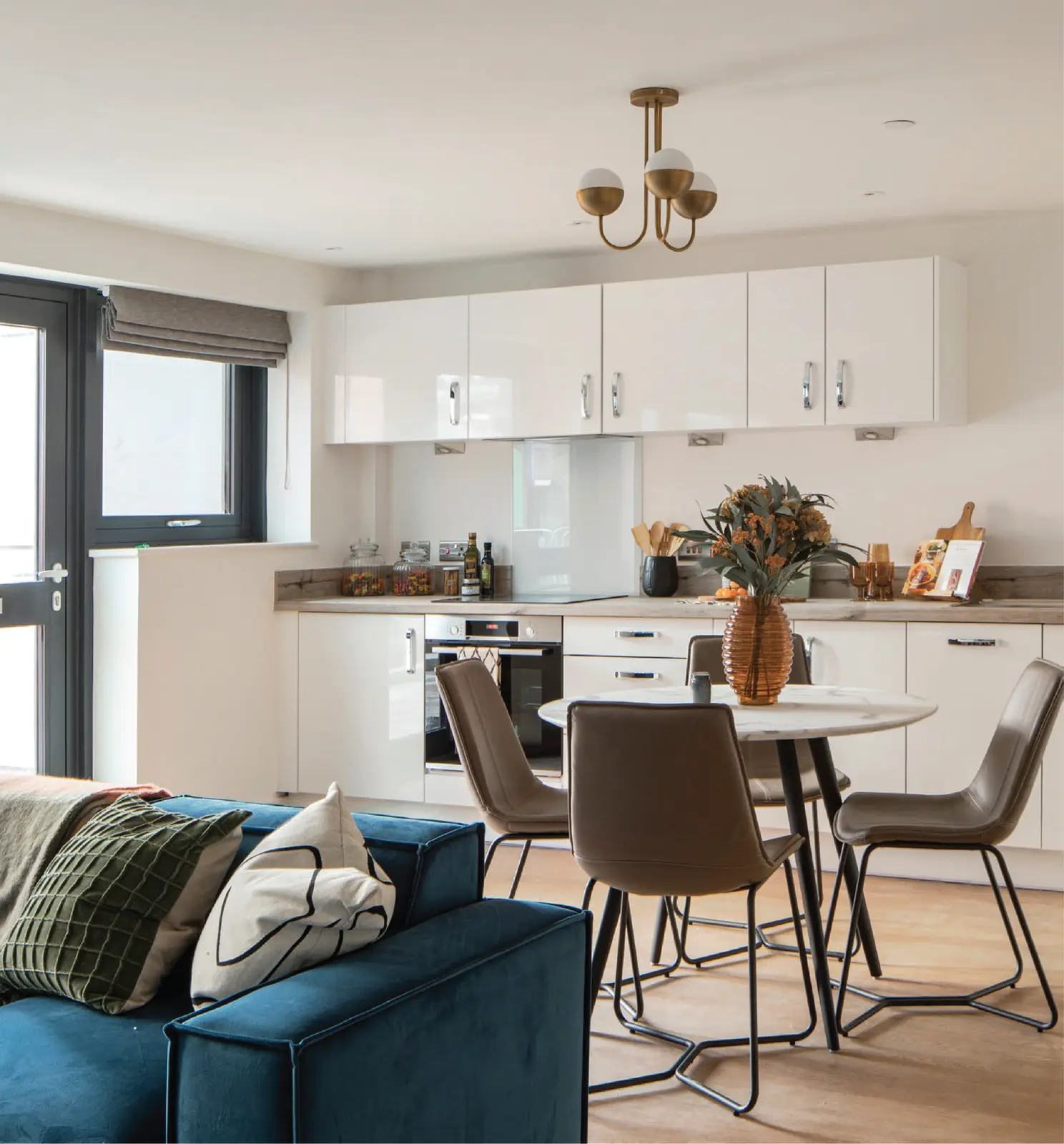
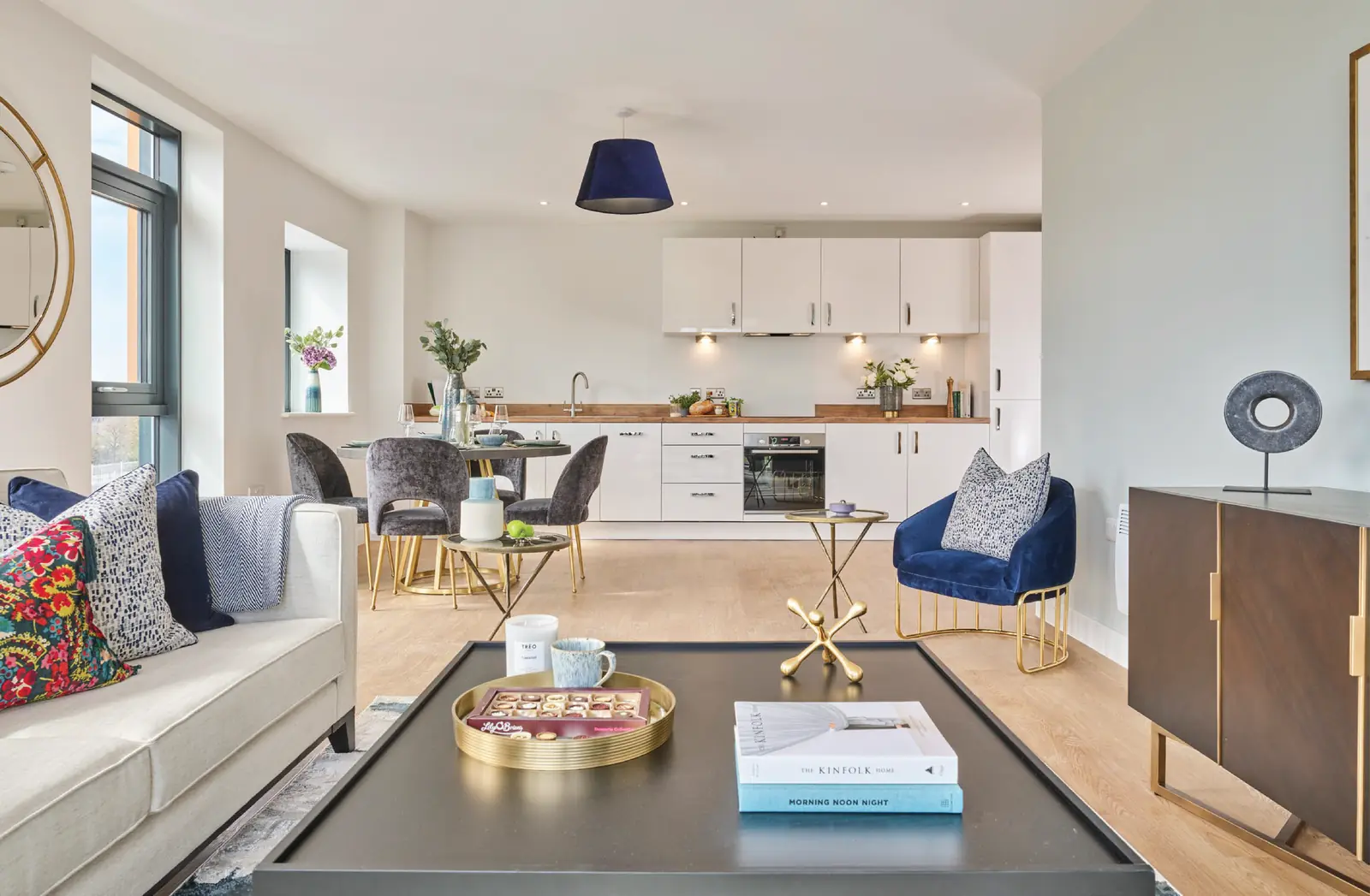
IGA analysis. The commercially relevant points are that the scheme is complete, the service charge is published rather than estimated, a majority of available two-bedroom units carry an existing tenancy, and the blended asking price per square foot sits well below the selected new-build comparables in section 07. Each can be verified before exchange. Whether any individual unit is the right purchase depends on floor, size, aspect, tenancy terms and the price achieved, which is a unit-level assessment rather than a scheme-level one.
IGA Global private investor opportunity
Availability, pricing and tenancy positions change. IGA works at unit level rather than scheme level, and will provide the current position with the analysis behind it:
- Current availability by unit, floor, size and aspect
- Current tenancy position and terms on tenanted units
- Rental evidence from the building and the immediate comparable set
- Service charge analysis from the published Latimer budget
- Financial forecast on your own assumptions and funding structure
- Specific unit recommendations based on your objectives
- Price per square foot benchmarking against the current comparable set
- A consultation with IGA before any commitment
Request Furness Quay availability and investment analysis
Ask for the current two-bedroom availability, the tenancy position on specific units and the analysis behind the figures in this briefing. All availability and pricing is subject to change without notice, and IGA Global does not provide regulated financial, investment, tax, mortgage or legal advice.
Test the full purchase cost and rental cash flow in our UK property investment guide.
Sources and methodology
Furness Quay figures are calculated from the IGA Furness Quay price list dated August 2026, using the 44 two-bedroom units shown as available. The average asking price is the arithmetic mean of those units. The blended price per square foot is total asking price divided by total floor area across the same set. Comparable figures are asking prices from live property portal listings on the dates stated, not achieved sale prices, and sizes are as advertised. Percentage differences are calculated as comparable figure divided by the Furness Quay average, minus one. Yields are indicative calculations on asking price and stated assumptions. Where a figure could not be traced to a primary source it has been omitted from this article.
Full comparable dataset
Sources and methodology
A note on this briefing. This is our own reading of the Manchester market, written as general information and researched to the standards we hold ourselves to. It is not personal advice, and IGA Global does not provide regulated financial, investment, tax, mortgage or legal advice. Pricing, availability and tenancy positions are correct as at August 2026 and can change. Please take your own professional advice before making a decision, and see our full disclaimer for the detail.