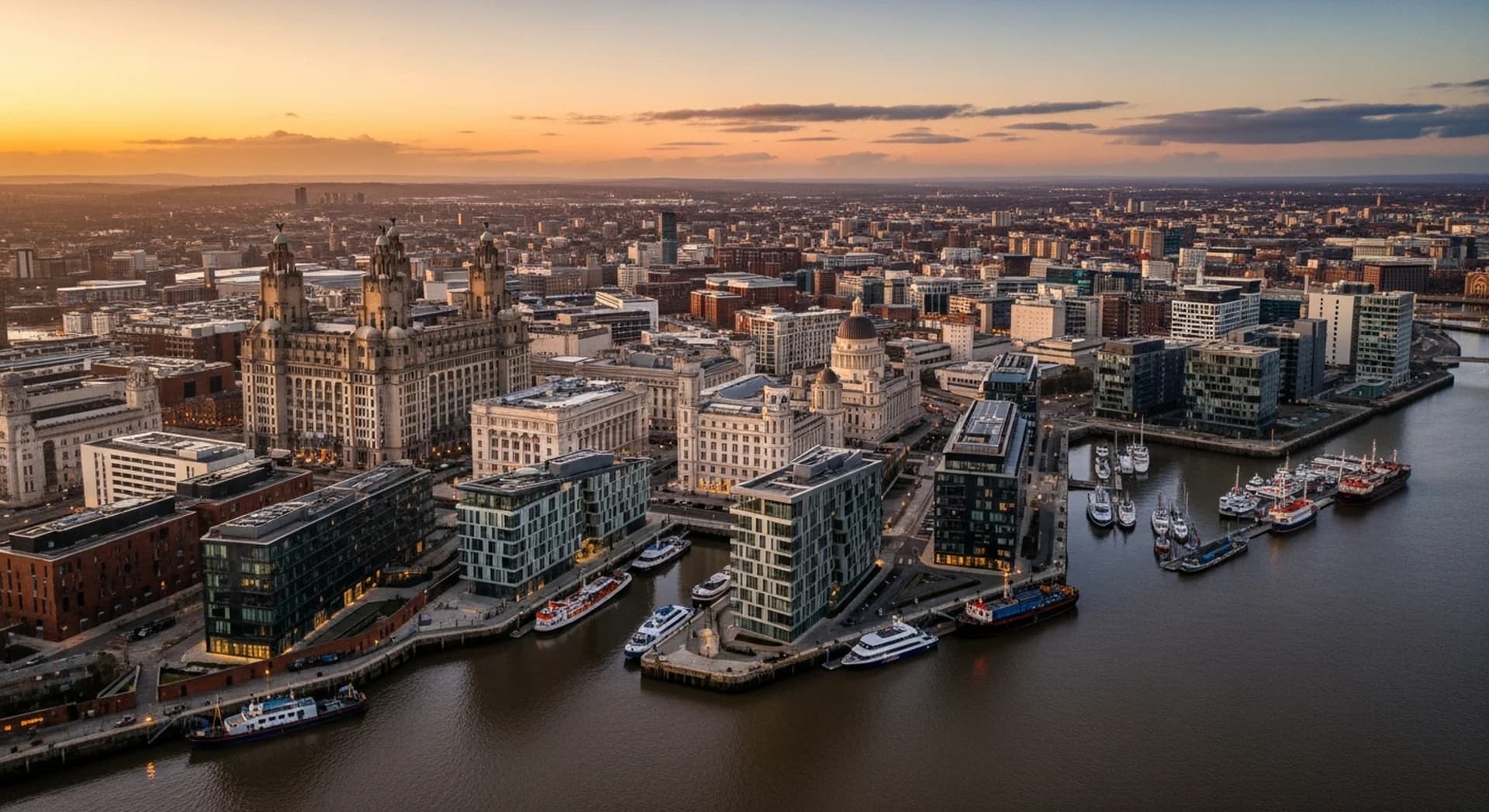
Why Liverpool, and why now
Liverpool enters the second half of 2026 with a combination that rarely appears together. Rents are growing at 5.9% a year, close to double the UK rate. Average prices sit £35,000 below the North West average and £86,000 below the UK average. Billions of pounds of regeneration are moving through the north of the city, with a stadium delivered, waterfront infrastructure funded and a new planning framework adopted. And published forecasts place the North West at the top of the five year regional table.
At the same time the sales market is more selective than it was three years ago, and the apartment segment in particular has been close to flat. That is usually presented as a reason to wait. We read it differently.
The core thesis. Several of Liverpool's fundamentals are strengthening while parts of the sales market remain relatively soft. That gap is where the opportunity sits. A selective market hands the initiative to the buyer: real leverage on entry price, incentives that disappear in a rising market, genuine choice of unit, and time to do the analysis properly. Meanwhile the income side of the equation, which is what actually pays an investor month to month, continues to strengthen.
The more interesting case for buying in 2026 may therefore not be immediate appreciation. It may be positioning ahead of a potential regional recovery, at a price the recovery would not offer.
“Timing, entry price, rental demand and the regional cycle. Get those four right in Liverpool in 2026 and the rest of the arithmetic tends to follow.”
We looked at Liverpool less closely through 2024 and 2025. What has changed is not the marketing. It is the underlying data, the delivery on the ground in the north of the city, and the balance of negotiating power.
Liverpool at a glance
Official statistics published by the Office for National Statistics and HM Land Registry, released 22 July 2026. House prices are for May 2026, rents for June 2026. Both are provisional.
Source: ONS, Private rent and house prices, UK: July 2026, published 22 July 2026, incorporating the ONS Price Index of Private Rents and the HM Land Registry UK House Price Index. These are city wide averages across the whole Liverpool housing stock. They measure the market rather than any individual property.
Why Liverpool
Rental demand is not created by marketing. It is created by the number of people who need to live somewhere and cannot, or do not yet want to, buy there. Liverpool's advantage is that its tenant base is not drawn from a single source.
Roughly 63,000 students arrive into a compact city centre every year, and a proportion stay on as graduates, moving from student accommodation into mainstream rented flats. Around them sits a professional workforce across health, life sciences, digital, legal and financial services in a city region generating £43 billion of output. Layered on top is one of the largest visitor economies outside London, sustaining hospitality, culture and sport employment year round. Each group rents at a different stage of life, which is what gives the demand base its depth.
A major regional city economy
Population just under 1.6 million and £43 billion of gross value added in 2023, around 2% of UK output. Scale is what makes a rental market liquid in both directions. Source: LCRCA Growth Plan Evidence Base, 2025.
Universities, graduates and the knowledge economy
Around 63,000 students across the University of Liverpool, Liverpool John Moores and Liverpool Hope, plus LIPA. Research, health and life sciences employment is less cyclical than retail or logistics, and the graduates who stay become the professional tenants who most value a well managed city centre flat. Source: HESA, 2023/24.
Culture, sport and the visitor economy
£6.25 billion of visitor spend across 60.29 million visits in 2023, supporting 58,435 jobs. Two Premier League clubs, UNESCO listed maritime heritage and a national events profile keep the city in demand year round. Source: LCRCA, August 2024, STEAM model.
Affordability and connectivity
At £185,000, Liverpool sits £35,000 below the North West average and £86,000 below the UK average, so more of the rent converts into yield. Lime Street reaches Manchester in 51 minutes and London Euston in 2h13m, and the airport handled a record 5.6 million passengers in 2025. Sources: ONS and HM Land Registry, May 2026; operator timetables, August 2026; Liverpool Chamber of Commerce, January 2026.
The rental market is doing the heavy lifting
Rental performance is the single strongest element of the current Liverpool picture, and it is the part of the equation that pays an investor from day one.
The detail that matters most. Liverpool's average rent of £905 sits below the North West average of £961, while its rental growth runs above the regional rate. A market that has already repriced may offer less immediate rental catch-up potential. A market renting below its regional average while growing faster than that average still has room to close the gap.
The practical consequence for an investor is straightforward. You are buying an income stream priced at a discount to its own region, in a city where entry prices are also below the regional average. Accessible entry prices combined with resilient and growing rental demand is the whole investment story in one line.
Why a selective market creates opportunity
Liverpool's sales market in 2026 is two speed. Houses have moved, apartments have not. Most commentary treats that as a reason to stay out. We think it is the most commercially useful fact on this page.
Read that chart from the buyer's side. When apartment values are flat, sellers and developers compete for a smaller pool of committed buyers, and everything that is unavailable in a hot market becomes available in this one.
Negotiating leverage
In a rising market the buyer competes against sentiment and pays for it. In a selective market the buyer is the scarce party. Entry price becomes negotiable, and a discount secured at purchase is a return the market itself is unlikely to hand over for several years.
Incentives and terms
Furniture packages, staged deposit structures and other commercial terms appear when developers need momentum, and are withdrawn once a scheme sells itself. Terms are part of the entry price and worth negotiating as hard as the headline figure.
Genuine choice of unit, and time to benchmark
Floor level, aspect, layout efficiency and price per square foot vary considerably within one development, and so do yield and resale liquidity. In a fast market the investor takes what is left, under pressure. In this one the best units are still on the table, with time to compare floorplans, request service charge budgets and benchmark properly.
Entry price does most of the work
This is the centre of how we invest. Across a full cycle the purchase price is the largest single determinant of both yield and resale outcome. A disciplined investor does not want to enter only once prices have accelerated. They want to enter while the price is still a matter of negotiation.
“We are not arguing that a soft apartment market is a good thing. We are arguing that no serious investor wants to buy only after the market has already moved.”
The North West outlook to 2030
The Savills June 2026 mainstream forecast gives the North West +25.0% cumulative growth from 2026 to 2030, the strongest five year outlook of any English region, joint with Yorkshire and the Humber, against +18.5% for the UK and +10.6% for London. This is a forecast for the North West mainstream market as a whole, not for Liverpool, city centre apartments or any individual development, and forecasts are revised.
| Year | North West | United Kingdom | Interpretation |
|---|---|---|---|
| 2026 | 0.0% | -2.0% | The North West holds flat while the UK is forecast to fall |
| 2027 | +3.5% | +2.5% | Recovery assumed to begin |
| 2028 | +6.5% | +5.0% | Forecast peak growth |
| 2029 | +6.5% | +6.0% | |
| 2030 | +6.5% | +6.0% | |
| 5 years | +25.0% | +18.5% | Cumulative to 2030 |
The shape of the forecast matters more than the headline. Two thirds of the forecast five year total falls in 2028 to 2030. The outlook is back loaded, which supports a medium to long term investment thesis rather than a short term trade. An investor with a five to ten year horizon is positioned for the part of the curve where the growth is forecast to sit.
It also reframes what buying in 2026 actually means. Nobody is buying into a rally. The proposition is entering during the flat year, at a negotiated price, and holding into the forecast recovery. The more interesting case for buying in 2026 is not immediate appreciation, but positioning ahead of a potential regional recovery.
North Liverpool is being rebuilt
The northern edge of Liverpool city centre and the docklands beyond it are the subject of one of the largest urban transformation programmes in the UK outside London. Some of it is complete, a substantial part is under construction with funding committed, and a further layer sits in adopted policy and live proposals.
Liverpool Waters and Central Docks · under construction, phased
Peel L&P's 148 acre waterfront regeneration, described by the developer as a £5 billion programme over 30 years. 1,308 homes and 289 hotel bedrooms are already delivered. Central Docks infrastructure works worth £81.1 million are under way, funded by a £55 million Homes England grant plus £26 million from Peel Waters, unlocking a further 2,350 homes. Source: Liverpool Waters, Peel L&P, updated 6 July 2026; Place North West, 2024.
North Docks Mayoral Development Corporation · proposed
The Combined Authority is proposing a Mayoral Development Corporation over 174 hectares of brownfield land, which it states could deliver up to 17,000 homes and around 5 million sq ft of commercial space. Statutory consultation ran to 14 August 2026, with formal creation to be considered in autumn 2026. Liverpool Waters and Pumpfields both sit inside the boundary. This is the signal to watch: a single delivery vehicle behind the entire northern corridor. Source: LCRCA, 2 July 2026 and 11 March 2026. The corporation is not yet established and the 17,000 figure is a stated ceiling for the proposed area.
Pumpfields and Limekilns · planning framework adopted
Adopted by Liverpool City Council on 2 June 2026: a twenty year vision for around 100 acres bounded by Leeds Street, Great Howard Street and Scotland Road, providing for more than 7,000 homes, 584,000 sq ft of employment space and a linear park. Adoption converts aspiration into the framework against which applications are now determined. Sources: Liverpool City Council, 2 June 2026; Place North West, 3 June 2026.
One Pall Mall Gardens · consented, construction from 2027
Kier Property and CTP hold consent for a £200 million office scheme beside Moorfields station: more than 100,000 sq ft of Grade A space in phase one within a masterplan of up to 400,000 sq ft, reported as Liverpool's first new build Grade A offices in over fifteen years. Construction begins 2027, occupation late 2028. New Grade A office space on the southern edge of Pumpfields is directly relevant to future tenant demand. Sources: Kier, 10 March 2026; Liverpool City Council via Liverpool Express, 9 July 2026.
Ten Streets · framework adopted, early delivery
125 acres of former dockland under an adopted Spatial Regeneration Framework, positioned as a creative, digital and technology district providing for up to 1 million sq ft and 2,500 jobs. Live projects include a £110 million, 507 apartment scheme in planning and £40 million secured for the Tobacco Warehouse conversion. Sources: Invest Liverpool and Regenerating Liverpool, accessed August 2026. Floorspace and jobs figures are framework targets.
Hill Dickinson Stadium, Bramley-Moore Dock · complete and operational
Everton's stadium within the Liverpool Waters site staged its first competitive fixture on 24 August 2025, with a capacity of approximately 52,800, and hosted the 2026 Rugby League Magic Weekend. It is the most visible completed piece of the transformation, and has drawn sustained footfall and hospitality activity into an area that previously had none. Sources: Buro Happold project record; BBC Sport, 2026.
Why Pumpfields is the district we find most interesting
The unit of analysis in regeneration investing is not the city. It is the district, and specifically the district positioned between an established employment core and an area undergoing structural change.
Pumpfields sits exactly there. Its southern boundary is Leeds Street, the northern edge of Liverpool's established commercial district. Its northern edge runs into the docklands covered by the proposed Mayoral Development Corporation. A resident here is within walking distance of the offices, retail, universities and transport of the city centre today, while sitting immediately adjacent to the largest concentration of planned development activity in the city.
“Existing rental demand plus regeneration optionality. That is the whole thesis in five words, and it is why Pumpfields is different from a pure regeneration play.”
A district that depends entirely on future regeneration is a speculative position: if the schemes slip, the investment case slips with them. Pumpfields is not in that category. The employment, transport, universities and tenant demand that support a letting already exist, half a mile away, and have done for a century. An apartment here lets on the strength of the established city centre, not on a masterplan.
The regeneration sits on top as a second layer: 7,000 homes in the adopted framework, Grade A offices consented on the southern boundary, Liverpool Waters under construction to the west and a Mayoral Development Corporation proposed around the whole corridor. The income case stands on its own. The regeneration is the upside. That is a materially better risk profile than either component alone.
How we assess an individual opportunity
A city can be interesting while a specific apartment in it is not. We apply the same six factors to every opportunity we look at, in every market.
Location
Walkability to employment, transport and amenity as it exists today. We test whether the location would still let well if none of the announced regeneration arrived.
Entry price
Price per square foot benchmarked against live competing off plan stock, completed local schemes and recent achieved sales. A premium has to be evidenced, not asserted.
Rental demand
Achievable rent for that unit type in that location, from comparable lettings evidence. Depth of the tenant pool matters as much as the headline figure.
Net yield
We model service charge, ground rent, fees, voids and finance costs. A durable net figure outranks an attractive gross one.
Resident appeal
Layout efficiency, light, aspect and whether the amenity is genuinely used. Buildings people want to stay in produce lower voids and stronger renewals.
Exit and resale
Who buys this unit in year five to ten, and on what evidence: owner occupier depth, mortgageability and the resale record of comparable local schemes.
“The city level story gets us interested. The individual property and the individual unit still have to stack up.”
The Forge, Pumpfields
The Forge is one of the live opportunities we are currently assessing within Pumpfields, and a good example of how the wider Liverpool thesis translates into an individual development. It sits inside the micro-market described above rather than being the reason we chose it.
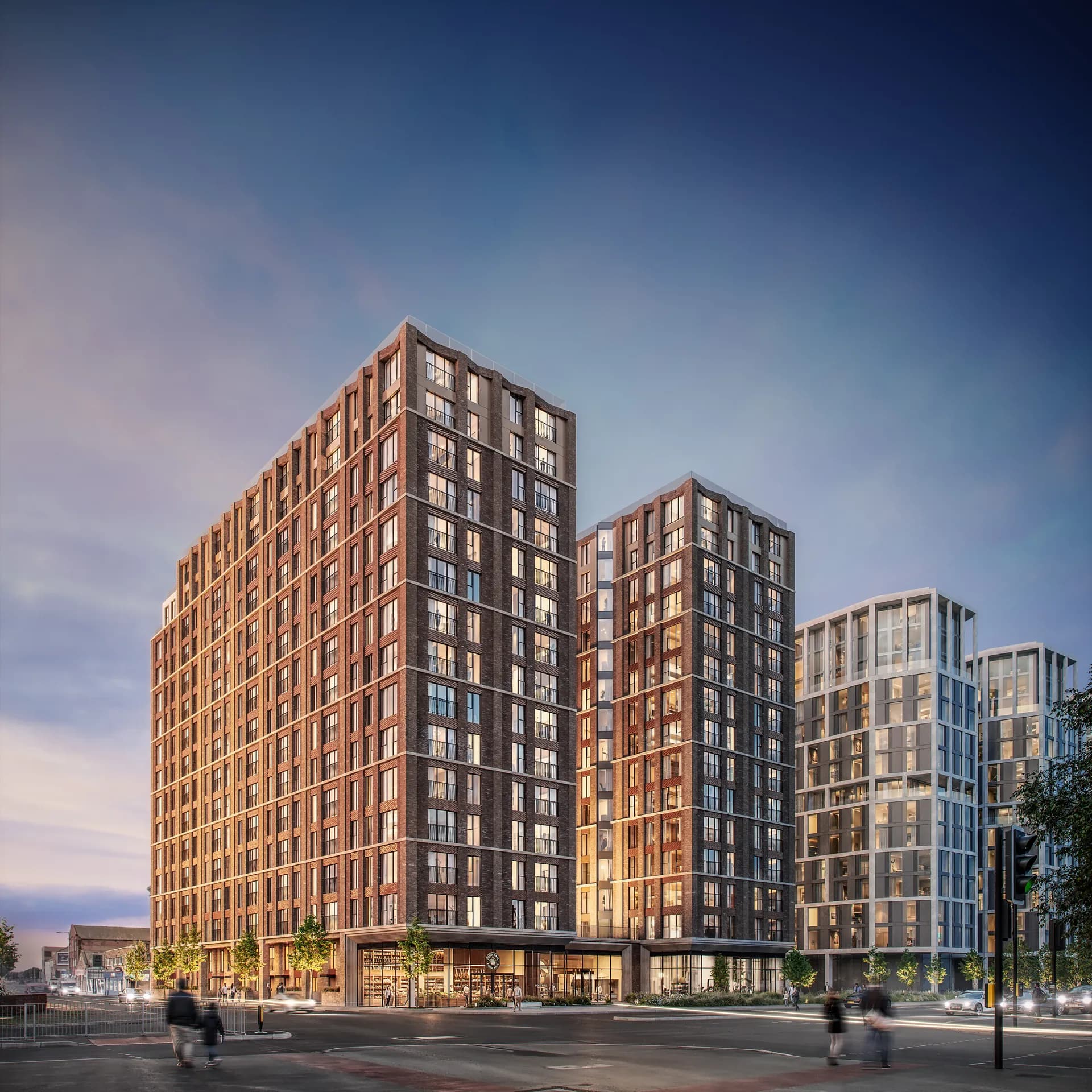
What caught our attention. Not the amenity list. Amenity is competitive across most Liverpool city centre schemes, and a list of facilities tells you little on its own about whether a unit will let or resell.
It is the combination. Proximity to the established CBD and Moorfields, a position in the core of the Pumpfields regeneration area, and a resident proposition built to compete for modern city centre tenants. The amenity matters here because the target tenant, the graduate and early career professional, actively chooses between buildings on exactly those terms. In a city where rents are rising at 5.9%, the buildings that capture the upper end of that growth are the ones tenants want to stay in. The resident provision runs concierge, gym, cinema, co-working, residents' lounge, private dining, rooftop garden and a rooftop running track.

How we work with it. We do not treat a scheme as a single investment decision. Our work on The Forge is unit level: we benchmark price per square foot against live competing Liverpool stock, identify the units we consider defensible on entry price and layout, and negotiate on that basis. Which unit you buy, and what you pay for it, will matter more to your outcome than the decision to invest in Liverpool at all.
IGA Global Private Investor Offer
The Forge, Liverpool. Available to qualifying investors introduced through IGA Global:
- Complimentary furniture package on qualifying reservations placed through IGA Global, subject to unit type and the terms in place at the point of reservation
- Current pricing and availability across remaining unit types, released directly rather than through a portal listing
- Floorplans and internal floor areas for every available unit, so that layout efficiency can be compared properly
- Price per square foot benchmarking against live competing Liverpool stock, so you can see how the entry price sits within the market rather than taking a headline figure on trust
- IGA unit selection support. We identify the specific units we consider defensible on entry price, layout, aspect and projected net yield
- Potential enhanced terms depending on unit selection and deposit structure, agreed case by case
This offer is specific to investors introduced through IGA Global. The Forge itself is also available through other channels. Any returns discussed are projected rather than guaranteed. See our full disclaimer for the detail.
Considering Liverpool property?
The useful conversation covers your budget, your objectives, whether you are buying primarily for income or for growth, whether you are purchasing in cash or with finance, and the timeframe you have in mind. From there we can tell you which Liverpool units are worth your attention, and which are not.
“Liverpool is not interesting because everything is already rising. It is interesting because several fundamentals are strengthening while parts of the sales market remain relatively soft. For a selective investor, that asymmetry is the opportunity.”
Test the full purchase cost and rental cash flow in our UK property investment guide.
Sources and methodology
Office for National Statistics: Private rent and house prices, UK: July 2026, published 22 July 2026, incorporating the Price Index of Private Rents. Rental reference period June 2026, provisional. Used for all Liverpool, North West, England and UK rent figures.
HM Land Registry and ONS: UK House Price Index, Liverpool local authority and North West region, May 2026 reference period, published 22 July 2026, provisional. Used for all house price levels, annual price changes and the property type breakdown.
Savills Research: June 2026 mainstream residential forecasts, published 1 June 2026, superseding the November 2025 edition. Used for all regional and UK five year forecast figures.
Liverpool City Region Combined Authority: North Docks Mayoral Development Corporation consultation, 2 July 2026, and next steps announcement, 11 March 2026. Growth Plan Evidence Base, 2025. Visitor economy release, August 2024.
Liverpool City Council: Pumpfields and Limekilns Supplementary Planning Document, adopted 2 June 2026. Ten Streets Spatial Regeneration Framework. Headline economic indicators, April 2025. Pall Mall investment statement via Liverpool Express, 9 July 2026.
Developers and industry: Liverpool Waters, Peel L&P: scheme data, delivery figures and Central Docks infrastructure funding, updated 6 July 2026. Kier Property: One Pall Mall Gardens milestones and consent details, 10 March 2026. Place North West: Liverpool Waters masterplan revision, 2024, and Pumpfields SPD adoption reporting, 3 June 2026. Invest Liverpool and Regenerating Liverpool: Ten Streets project data, accessed August 2026.
HESA and transport operators: HESA student enrolment data, 2023/24 academic year. TransPennine Express and Avanti West Coast published timetables, August 2026. Liverpool Chamber of Commerce, Liverpool John Lennon Airport passenger figures, 9 January 2026.
IGA Global: Market interpretation, the six factor investment framework and all commentary on entry price and unit selection are IGA analysis and opinion, not third party data.
Methodology: Statistics are attributed to the publishing organisation and the reference period rather than the date of access. ONS and HM Land Registry figures for recent months are provisional and are routinely revised. Forecast figures are the opinion of the publishing organisation, are revised regularly and are not a reliable indicator of future results. Regional forecasts describe an entire region and should not be applied to an individual city, district, development or unit. Regeneration schemes are labelled by their actual planning and delivery status, and proposals are distinguished from consented and completed development. Computer generated images are labelled as artist's impressions and depict proposed rather than completed development.
A note on this briefing. This is our own reading of the Liverpool market, written as general information and researched to the standards we hold ourselves to. It is not personal advice, and IGA Global does not provide regulated financial, investment, tax or legal advice. Figures from the ONS and HM Land Registry are provisional and get revised, and forecasts are the opinion of the house that published them. Please take your own professional advice before making a decision, and see our full disclaimer for the detail.