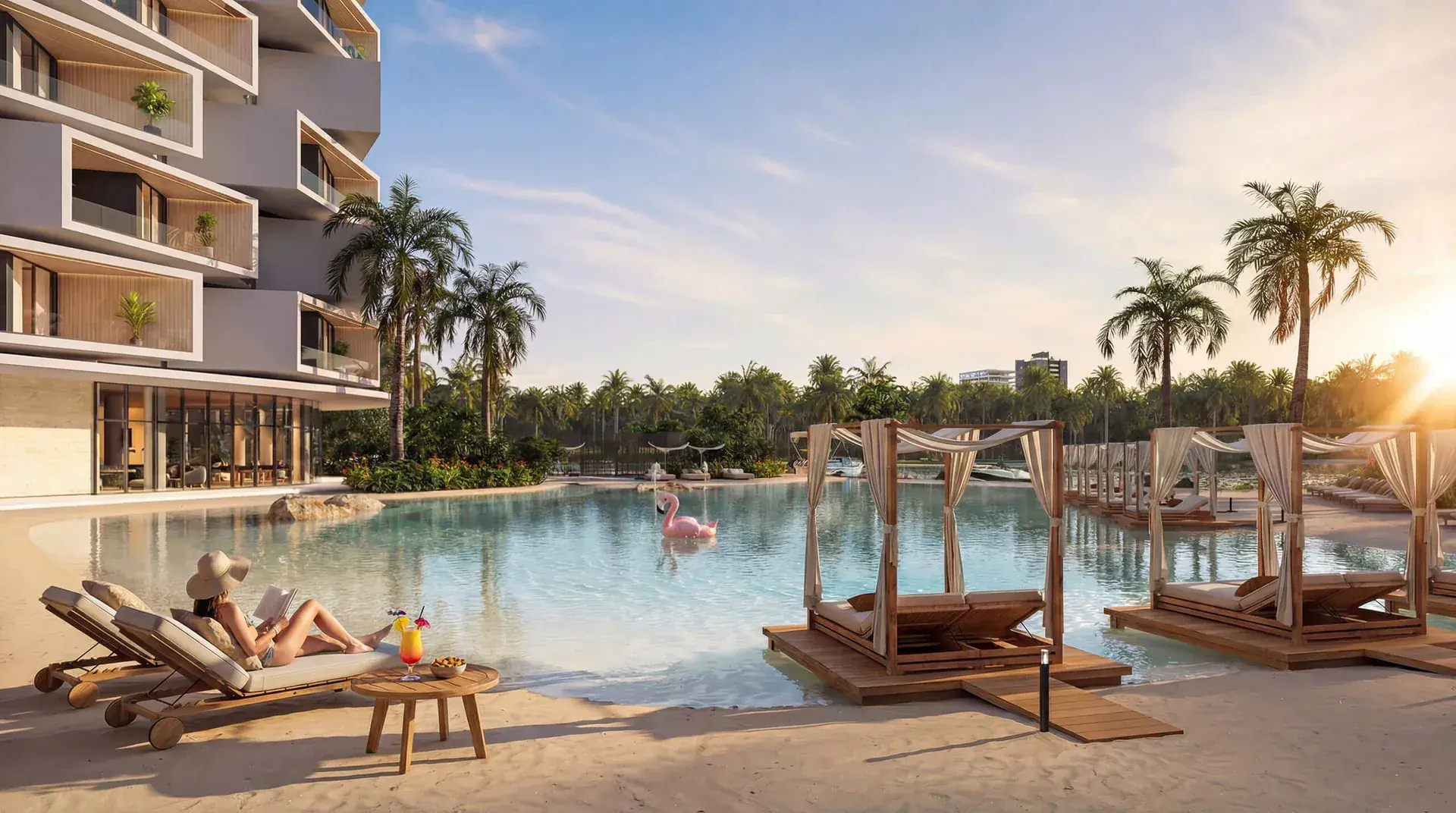
Dominican Republic
The Dominican Republic is the Caribbean's largest tourism economy and its most open market for foreign property buyers. Ownership is full freehold on the same constitutional footing as Dominican nationals, stock is priced and let in US dollars, and qualifying tourism developments carry statutory tax relief under the CONFOTUR programme. For international investors it functions as a hard-currency, lifestyle-led diversification play with an operating rental market attached.

Understanding Dominican Republic
Within a global portfolio the Dominican Republic occupies a different seat to a UK buy-to-let or a Dubai off-plan position. It is a hard-currency, tourism-driven market where returns come from professionally managed short-stay occupancy rather than long-let tenancy, and where the tax treatment of qualifying developments is set in statute rather than negotiated. The buying process is unusually straightforward by Caribbean standards: no ownership restriction on foreigners, registered title, and a notarised transfer that international buyers can complete remotely. The considerations are the ones common to every resort market: operator quality, seasonality, and the discipline to buy in the schemes that actually carry CONFOTUR registration.
Macro Economic Fundamentals
The Dominican Republic has been among the fastest-growing economies in Latin America and the Caribbean for the past decade, with tourism, mining, free-trade manufacturing and remittances providing a broader base than most island economies. Punta Cana International Airport is the region's busiest privately operated gateway and carries direct scheduled service from North America and Europe, which is the single most important structural support under east-coast resort demand. Real estate is transacted in US dollars, so an international buyer's capital and income sit outside local currency movement even though the domestic currency is the peso.
Property Market Dynamics
Demand in the resort corridor is international rather than domestic, drawn from the United States, Canada, Europe, Latin America and increasingly South Africa. The premium end concentrates in a small number of master-planned gated communities, of which Cap Cana is the most established, where supply is controlled by the master developer and amenity is delivered at resort standard. Income is generated through managed rental programmes rather than conventional letting, so operator brand, distribution and occupancy management matter more to the outcome than the unit itself.
Legal and Ownership Framework
Foreign buyers face no restriction. Non-citizens acquire full freehold title on the same constitutional basis as Dominican nationals, with no permit, quota, holding vehicle or local partner required. Title sits in a registered, Torrens-style system administered by the Title Registry, and transfer is completed by a notary. Cross-border purchases are routinely completed with a title search and title insurance, and can be executed under power of attorney without the buyer travelling.
Tax Environment and CONFOTUR
CONFOTUR is the Dominican Republic's tourism development incentive. Where a development holds CONFOTUR registration, the buyer is exempt from the 3% property transfer tax at purchase and from annual property tax (IPI) for 15 years from completion. That relief attaches to the qualifying project, not to the buyer, so confirming a development's registration status is a due-diligence step rather than an assumption. Rental income and any onward disposal are taxed according to ownership structure and residency, and warrant advice before purchase.
Income and Operating Model
Resort residences in the premium segment are typically delivered fully furnished and placed into a managed rental pool operated by a hotel brand. That model removes the owner from day-to-day letting, furnishing and maintenance, and in exchange the operator takes a management share and applies its own occupancy and rate strategy. Returns are therefore a function of the operator's distribution strength and the market's seasonality, not of a fixed contractual yield. Projections should be reviewed at unit level against the specific rental programme agreement.
Investor Suitability
The Dominican Republic suits investors seeking hard-currency exposure outside traditional markets, combined with genuine personal use. It is well matched to buyers who want a managed, hands-off asset and who value the certainty of freehold title and legislated tax relief. It is less suited to investors requiring a contractual income floor, short holding periods, or the liquidity profile of a major city market.
The Dominican Republic collection
A curated selection of investment properties in Dominican Republic. Each project carries full specifications, payment plans and due diligence materials.
 Phase 2 Released
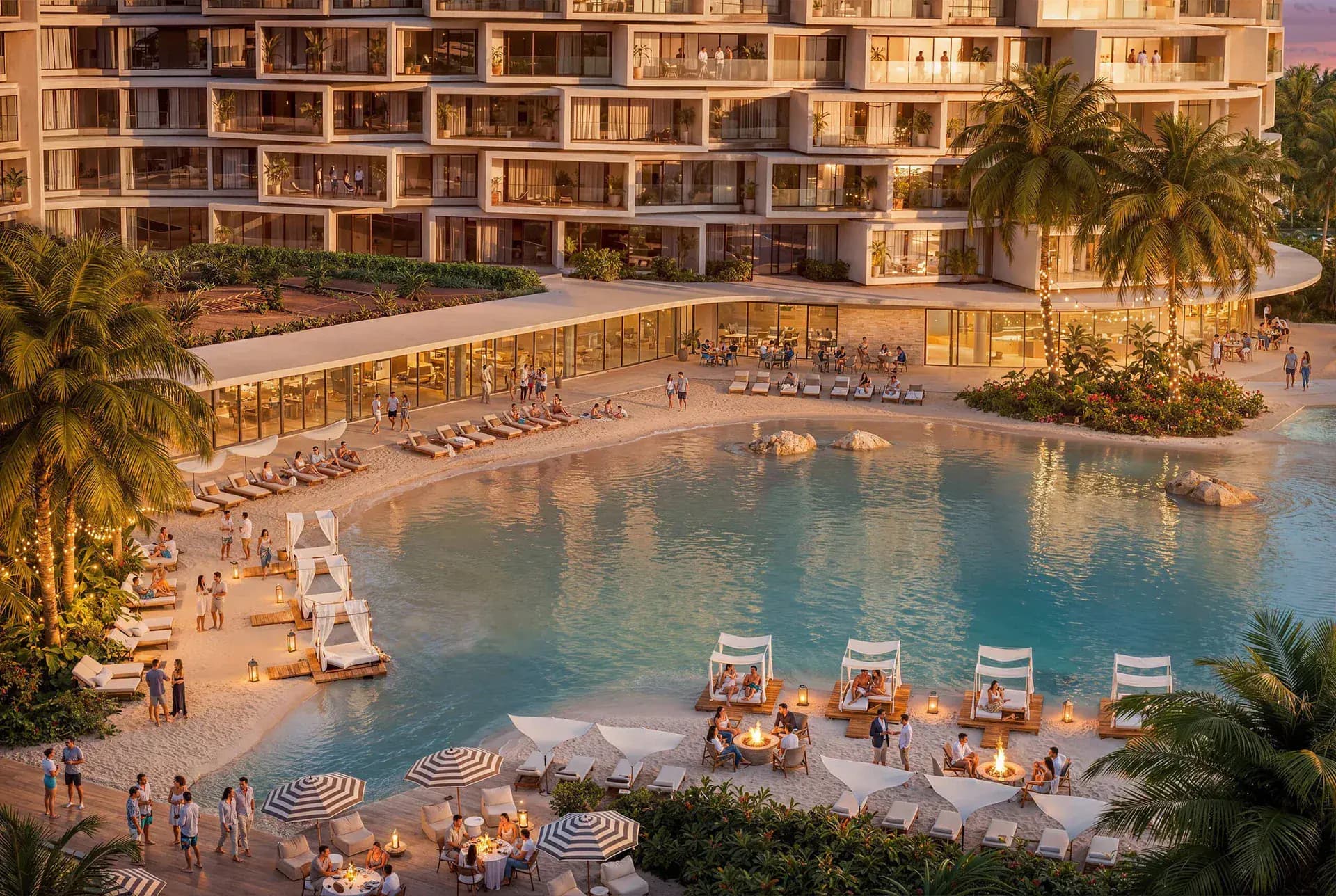
Makai Residences is a 102-condo Phase 2 release inside Cap Cana, Punta Cana's leading gated resort community, 500 metres from Juanillo Beach and directly beside the new Las Iguanas Golf Course. One and two-bedroom condos and penthouses are delivered fully furnished to hotel standard and operated by Dolce Hotels and Resorts by Wyndham, so owners can occupy, let, or do both without running the asset themselves. Priced from USD 350,000 with completion in Q2 2029, and registered under CONFOTUR: no 3% transfer tax at purchase and no annual property tax for 15 years.
Prices, completion dates and availability are indicative and subject to change. Property investment carries risk: capital values and rental income can fall as well as rise, and returns are not guaranteed. Seek independent advice before investing.
Why invest in Dominican Republic
The reasons Dominican Republic earns a place in an international portfolio, and the conditions that have to hold for those reasons to keep working.
Executive Investment Summary
A hard-currency Caribbean market with unrestricted freehold ownership for foreigners, statutory 15-year tax relief on qualifying tourism developments, and an operating short-stay rental economy served by international hotel operators. Best approached as a lifestyle-led diversification allocation with a managed income component, over a medium to long-term horizon.
Unrestricted Foreign Ownership
Non-citizens hold full freehold title with the same constitutional protection as Dominican nationals. No permit, no quota, no local partner and no holding-company requirement. Title is registered and transfer is notarised, and the process can be completed remotely under power of attorney.
CONFOTUR Tax Relief
Developments registered under the CONFOTUR tourism incentive carry exemption from the 3% property transfer tax at purchase, and exemption from annual property tax (IPI) for 15 years. Registration attaches to the project, so status should be confirmed in writing before reserving.
US Dollar Denomination
Purchase prices, rental income and resale in the resort segment are transacted in US dollars. An international buyer's capital and income are therefore insulated from Dominican peso movement, which materially changes the risk profile against most emerging-market property.
Operator-Managed Income
Premium stock is delivered furnished and placed into a hotel-managed rental programme, giving owners a genuinely hands-off asset with brand-level distribution behind occupancy. Returns follow the operator's performance and market seasonality rather than a fixed contractual yield.
Access and Connectivity
Punta Cana International Airport is the busiest privately operated gateway in the Caribbean, with direct scheduled service from North America and Europe. Air access is the structural foundation under east-coast resort demand and the main reason the corridor outperforms less-connected islands.
Key investment areas
Where demand in Dominican Republic actually concentrates. We work in a small number of well-understood submarkets rather than across the whole country, because tenant demand, supply and exit liquidity are local, not national.
Cap Cana (gated resort community, Punta Cana)
Punta Cana and Bavaro (east coast tourism corridor)
Casa de Campo and La Romana (south east)
Las Terrenas and Samana (north east peninsula)
Property types available
The asset classes we actively source in this market. Each carries a different income profile, management burden and exit audience, and we will steer you to the one that fits your objective rather than the one with the largest inventory.
How the Dominican Republic market works
The mechanics that decide what you can buy, what you actually own, and what it costs to hold. These are the questions we settle before a property is ever discussed.
- Legal Framework
- Civil law jurisdiction with a Torrens-style registered title system administered by the Title Registry, and a notarised transfer process backed by title insurance in most cross-border transactions
- Foreign Ownership
- Unrestricted. Non-citizens hold full freehold title on the same constitutional basis as Dominican nationals, with no permit, quota or local-partner requirement
- Currency
- DOP (Dominican Peso). Resort and investment stock is transacted in USD
- Taxation
- CONFOTUR-registered tourism developments are exempt from the 3% property transfer tax at purchase and from annual property tax (IPI) for 15 years. Rental income taxation depends on ownership structure and residency.
Entry levels and yields are indicative of the market, not a quote for any specific asset, and are not guaranteed. Tax treatment depends on your own circumstances.
Risks and considerations
What can go wrong in Dominican Republic, stated plainly. We would rather lose a transaction than have an investor discover any of this after completion.
Resort and short-stay markets are seasonal. Occupancy and therefore income vary through the year, and headline annual figures can mask significant month-to-month movement.
Income in a managed rental programme depends on the operator's distribution, rate strategy and cost base. Management shares, operating deductions and furniture replacement reserves are taken before an owner's net position.
CONFOTUR relief attaches to a registered development, not to the buyer. Confirm a project's registration status in writing rather than assuming it applies.
Liquidity is thinner than in major city markets, and resale in the resort segment depends on international buyer demand at the time of sale. A medium to long-term holding horizon is appropriate.
Off-plan purchase carries delivery, specification and valuation risk at completion, and staged payment obligations fall due through the construction period regardless of market conditions.
Dominican Republic investment questions
The questions investors ask us most about this market, answered without the sales gloss.
Can foreigners buy property in the Dominican Republic?
Yes, without restriction. The Dominican constitution extends the same property rights to non-citizens as to Dominican nationals. There is no permit requirement, no ownership quota, no obligation to use a local partner or holding company, and no restriction on which areas foreigners may buy in. Title is held freehold and registered with the Title Registry.
What is CONFOTUR and what does it actually save?
CONFOTUR is the Dominican Republic's tourism development incentive programme. Where a development holds CONFOTUR registration, the buyer is exempt from the 3% property transfer tax normally payable at purchase, and exempt from annual property tax (IPI) for 15 years from completion. The relief is granted to the qualifying project, so it should be confirmed in writing for the specific development before reserving.
What currency will I buy and earn in?
The domestic currency is the Dominican peso, but the resort and international investment segment is priced, contracted and let in US dollars. Purchase payments, rental income and resale in this segment are therefore USD-denominated, which removes local currency exposure from an international buyer's return.
How does rental income work on a managed residence?
Premium developments are typically delivered fully furnished and placed into a rental programme run by a hotel operator. The operator handles marketing, distribution, guest servicing and maintenance, and takes a management share of revenue along with operating costs. Owners retain personal-use rights subject to the programme terms. Returns follow occupancy and rate performance and are not contractually guaranteed, so unit-level projections should be reviewed alongside the rental programme agreement.
Can I complete a purchase without travelling to the Dominican Republic?
Yes. Cross-border purchases are routinely completed under power of attorney, with a Dominican attorney conducting the title search, the transfer executed before a notary, and title insurance arranged in most international transactions. IGA Global coordinates legal, payment and title steps for clients buying remotely.
What ongoing costs apply to ownership?
Expect community and resort maintenance charges, utilities, insurance, and where applicable the rental programme's management share and operating deductions. Annual property tax (IPI) is exempt for 15 years on CONFOTUR-registered developments and otherwise applies above a statutory threshold. Personal tax treatment of rental income and disposal depends on ownership structure and residency, and requires independent advice.
Have a question that is not answered here?
Speak with an adviserStructuring your global portfolio?
Whether you're approaching your first international property purchase or putting proper structure around an existing multi-jurisdiction portfolio, IGA Global offers principal-led advisory, disciplined analysis and scenario modelling, and a global partner network, so you can proceed with confidence.
Begin with a private consultation to discuss your objectives, review our current curated opportunities, or download our complimentary Investment Guide for an overview of international mobility strategies and income-led global diversification.